 Chris Davies/SlashGear
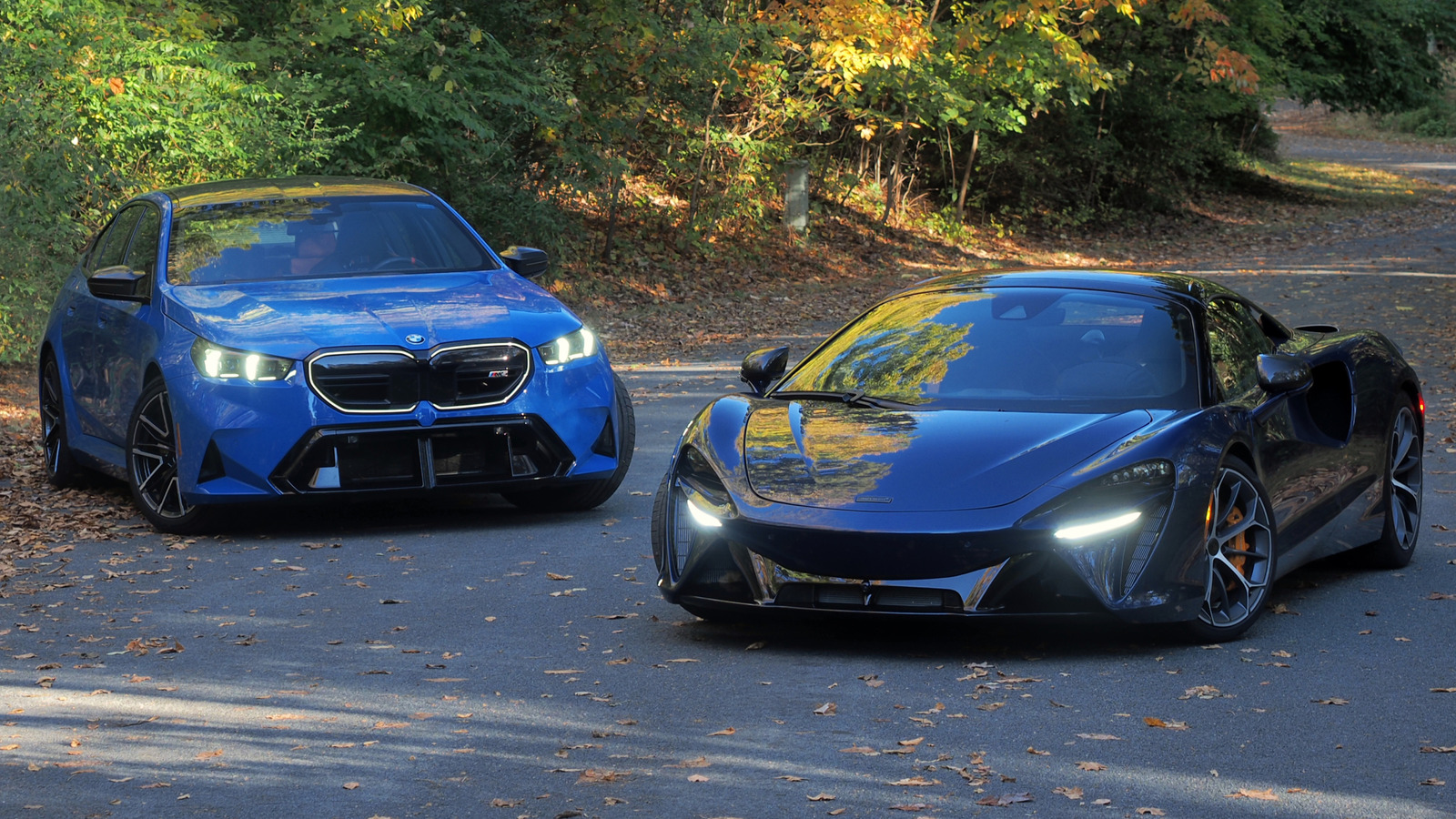
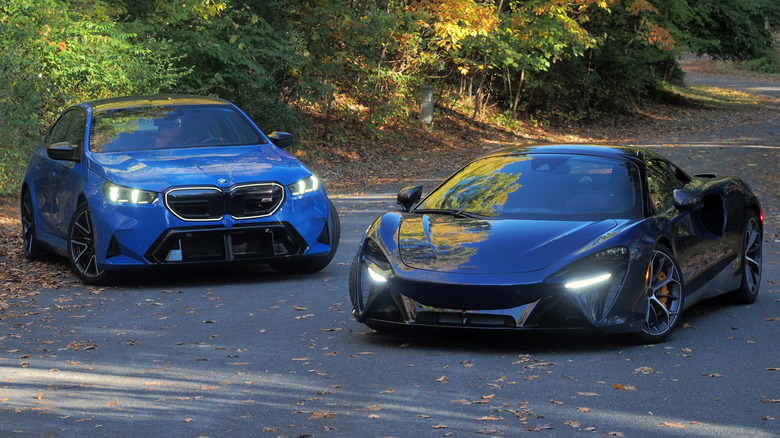
Sometimes, the scheduling gods smile upon you. Rarer still, they've negotiated beforehand with the deities responsible for the weather, delivering a weekend that while maybe not totally dry, is close to it. As last-hurrahs before the Midwest winter sets in, a BMW M5 and McLaren Artura landing on the driveway simultaneously is tough to beat.
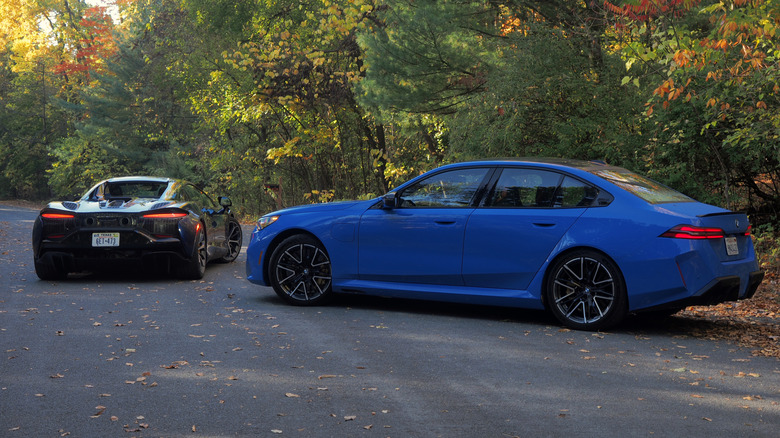
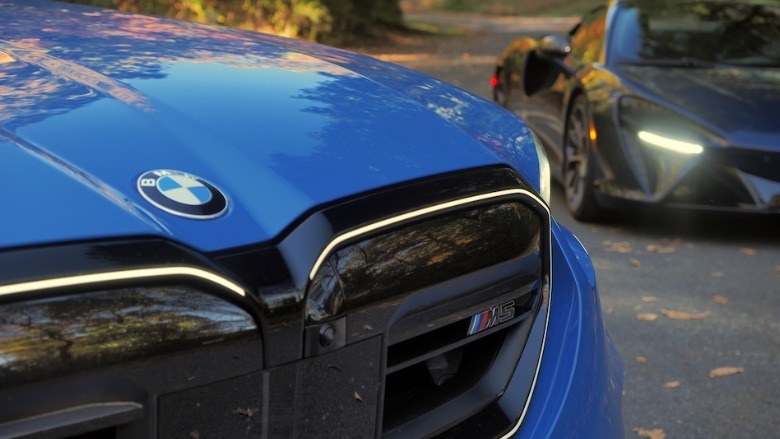
As is invariably the case with a car bearing the BMW "M" badge or McLaren's swooping logo, these are first and foremost performance cars. They're also — at first glance, anyway — very different beasts: four doors versus two; German versus British; a mere $146k as-tested for the M5, versus a heady $326k for the well-optioned Artura Spider.
 Chris Davies/SlashGear
At their core, though, there's a thoroughly modern similarity: the combination of good old-fashioned gasoline and new-fangled electricity to deliver maximum pace. BMW and McLaren fans alike may have been affronted when these potent plug-in hybrids were announced, but can they pull together their strengths to win over skeptics?
More power, more weight
 Chris Davies/SlashGear
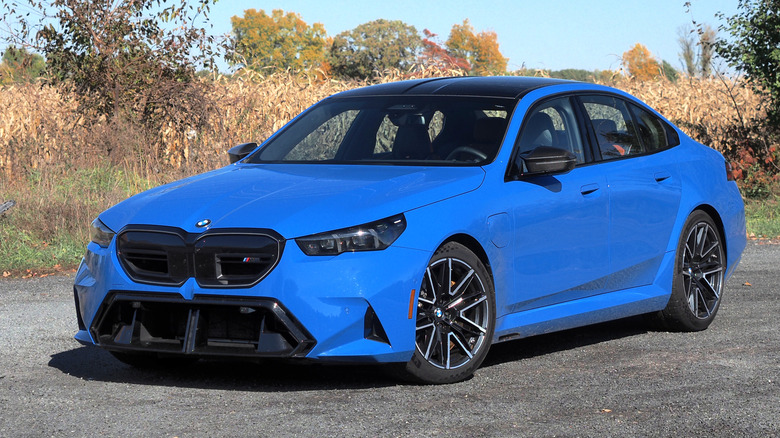
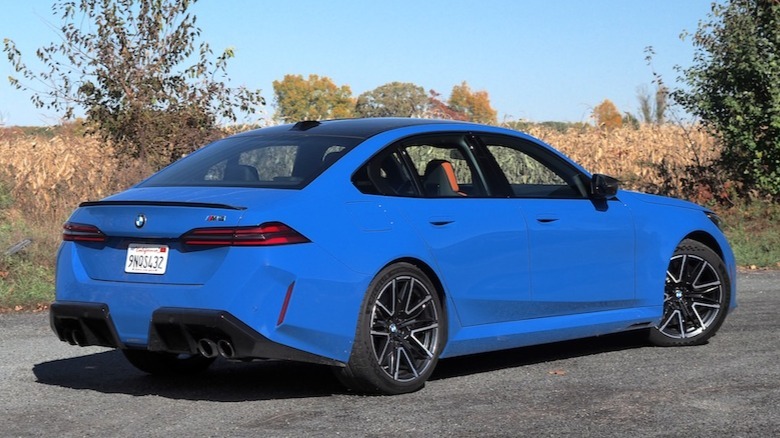
BMW's M5 is a stalwart of the performance world, so eyebrows soared when the automaker announced the seventh version of the sedan to bear the nameplate would be a plug-in hybrid. Like the controversially-styled XM SUV, it keeps the well-esteemed 4.4-liter twin-turbo V8 gas engine that has delivered so many smiles in other BMW product, but combined with an electric motor and an 8-speed automatic transmission.
The result is 717 horsepower and 738 lb-ft of torque, for a BMW-claimed 0-60 mph time of 3.4 seconds. So far, so speedy, but the new M5's battery also allows for a quoted 25 miles of EV-only driving.
 Chris Davies/SlashGear
Big, luxury sedans with V8 engines are not generally lightweight beasts, and adding an extra motor and a battery doesn't leave this M5 any more dainty. At 5,390 pounds, it's only 62 pounds behind an X7 xDrive40i SUV.
The Brit is quicker, but you can't bring as many friends
 Chris Davies/SlashGear
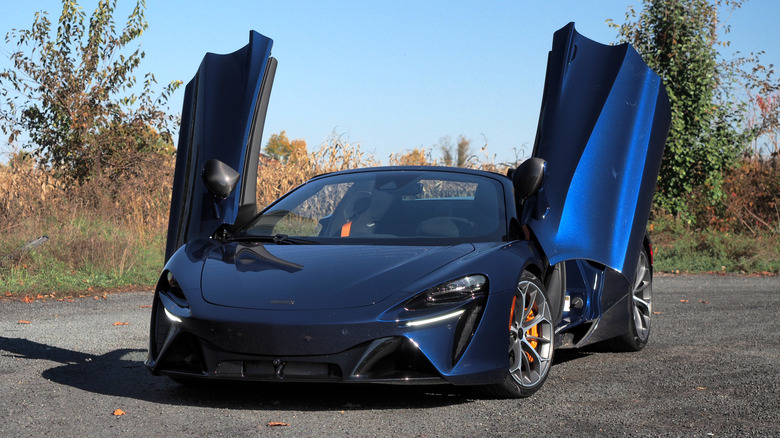
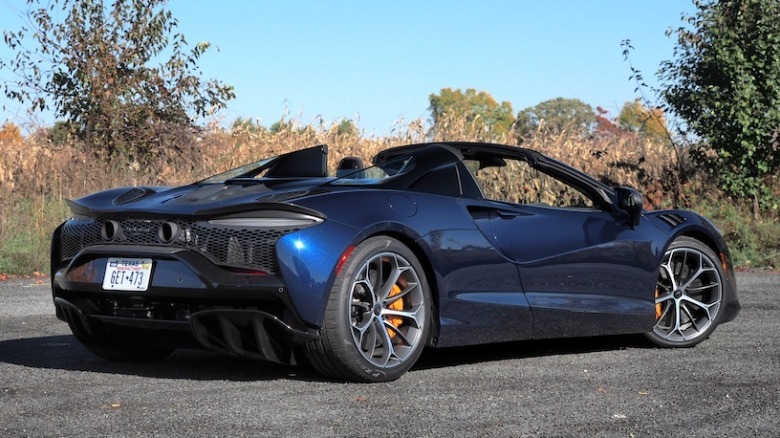
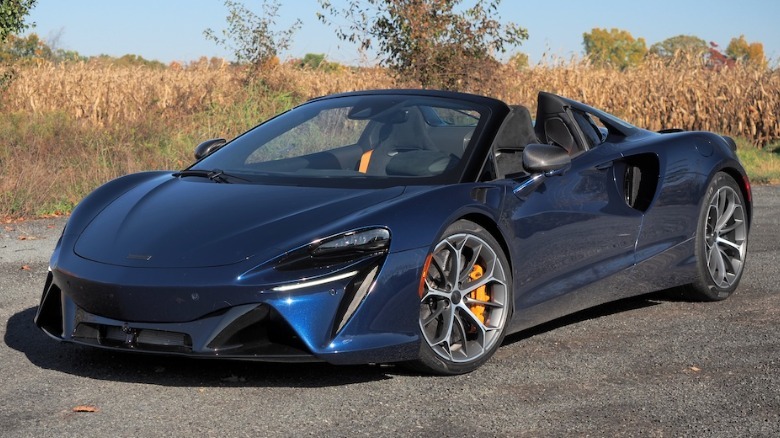
With only two seats, a far more snug cabin, and vestigial cargo space, it comes as no surprise to hear that the Artura Spider is significantly lighter than the M5. Its 3,439 pound curb weight (with fluids and a nearly full tank of gas) impresses more because it's only 136 pounds heavier than the Artura coupe, despite having a retractable hard-top roof.
 Chris Davies/SlashGear
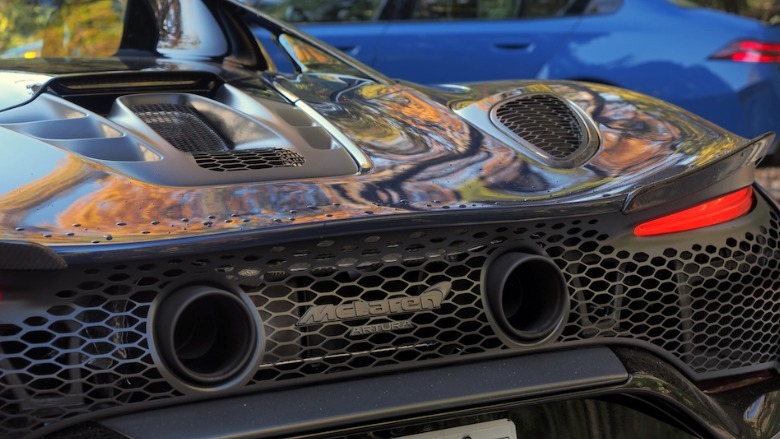
That swiftly-folding mechanism sits atop a 3.0-liter twin-turbocharged V6 gas engine, which McLaren pairs with an 8-speed transmission and an electric motor. The total 690 horsepower and 531 lb-ft of torque hit the road — in traditional McLaren style — through the rear wheels alone (the BMW has all-wheel drive as standard).
 Chris Davies/SlashGear
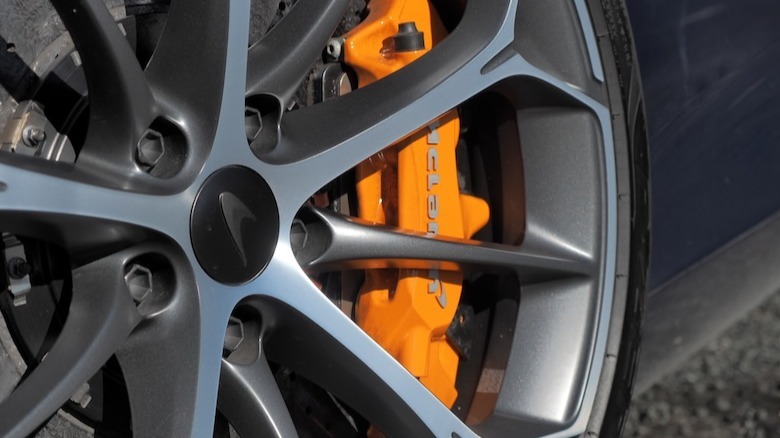
Altogether, 0-60 mph arrives in a quoted 3.0 seconds. In E-Mode, the Artura Spider should drive up to 11 miles without calling upon the gas engine, the automaker suggests.
Fast in the corners, if your nerves allow it
 Chris Davies/SlashGear
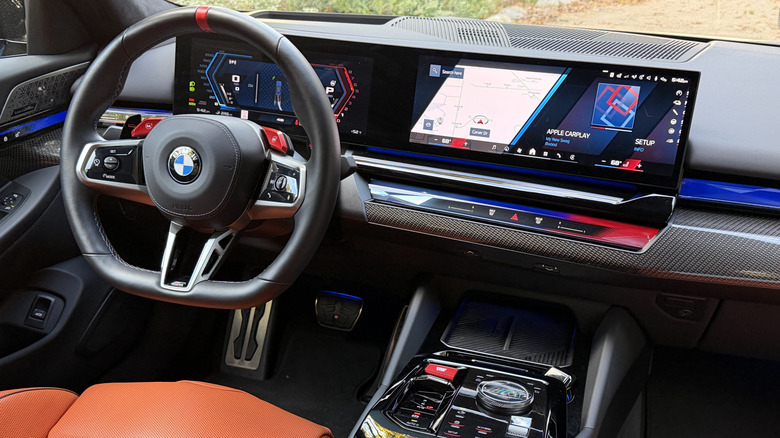
Weight underscores the new M5 experience. It is, clearly, outrageously swift: all that power and torque are more than sufficient to propel it in a straight line with alacrity. Like with other hefty, horsepower-rich cars (I'm thinking of you, GMC Hummer EV), you can't help but be reminded of Archimedes' famed promise that "Give me a lever long enough and a fulcrum on which to place it, and I shall move the world."
 Chris Davies/SlashGear
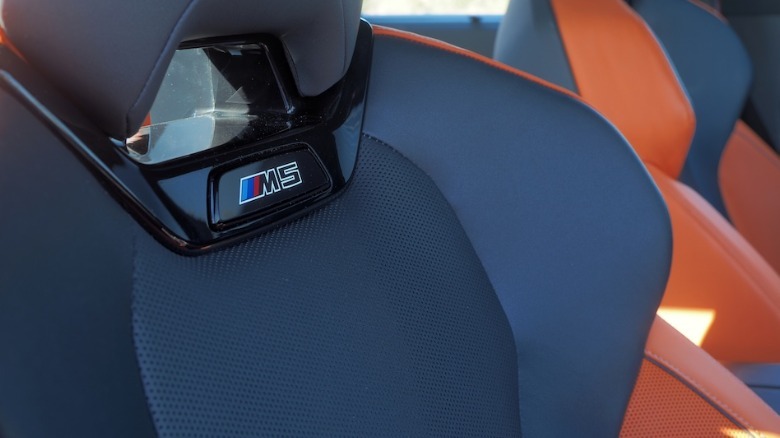
Shocking, then, to reach a corner and find the big BMW can turn, too. There's a palpable feeling of the M5's computers reaching through and finessing all the power and the all-wheel drive system (you can, if you're feeling particularly frisky, switch it into RWD mode). Speeds at which you'd swear you'd overcooked things are handled with minimal drama, the sedan staying planted like there's a heavy hand pressing down on the roof.
 Chris Davies/SlashGear
What can't be escaped — or, at least, not in a borrowed car for a week's playtime — are the body's own senses. The M5 feels heavy, it has a mass that's impossible to ignore. Combined with its overall scale, which didn't shrink around me in the way some big cars can, the BMW felt a little too much for backroad silliness.
Complicated drivetrain, simple controls
 Chris Davies/SlashGear
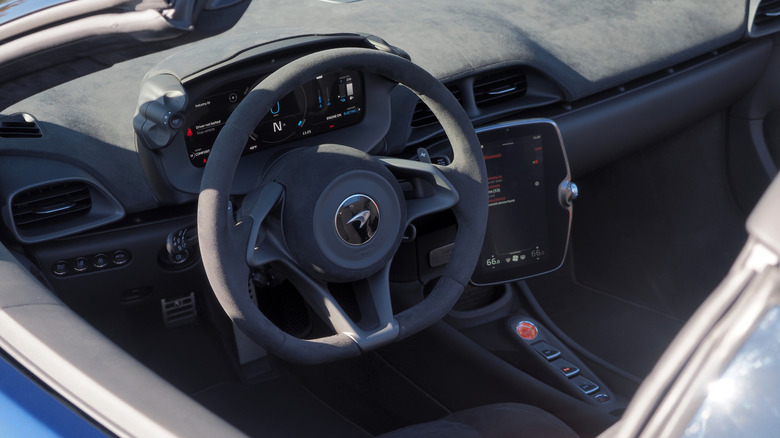
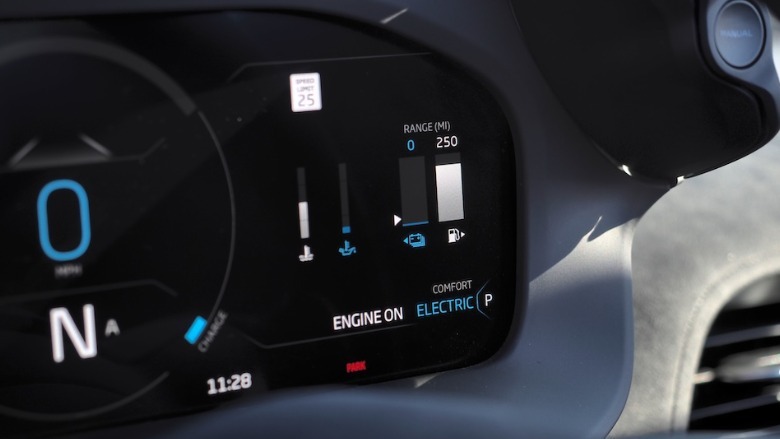
That's not an accusation you can level at the Artura. McLaren's combination of gas and electric power does the same weight-offsetting trick as in the M5, but — since the two-door isn't making any broad promises for everyday usability — it can slice away more of the bulk and focus in on fun.
 Chris Davies/SlashGear
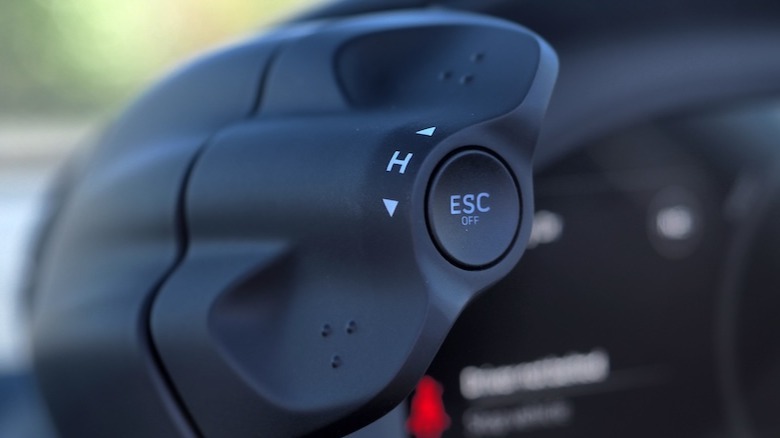
A supremely communicative chassis helps, regularly punctuated by the crackle of gravel on carbon fiber, not to mention McLaren's precise, direct steering. As always, being able to individually toggle through the suspension and powertrain settings using rocker-switches atop the driver's gauge binnacle makes on-the-fly adjustments to road conditions and mood simple.
 Chris Davies/SlashGear
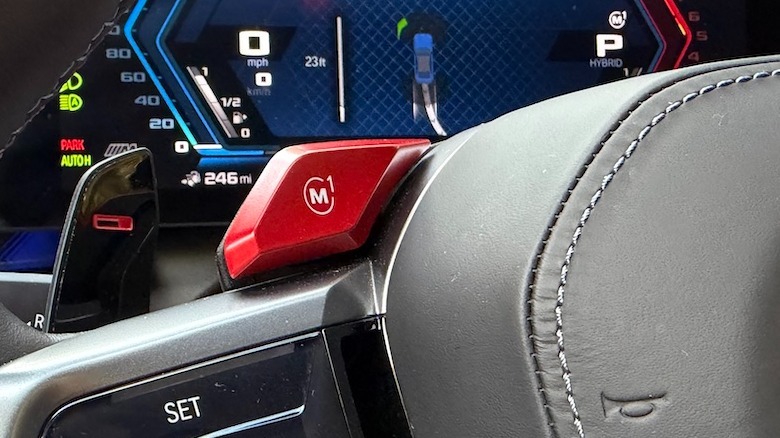
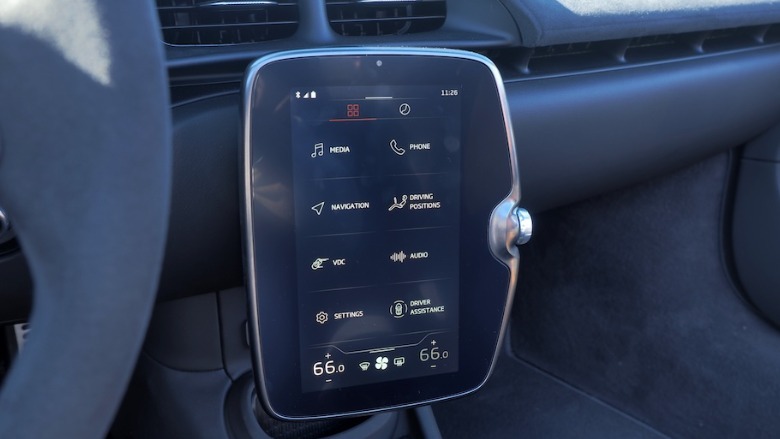
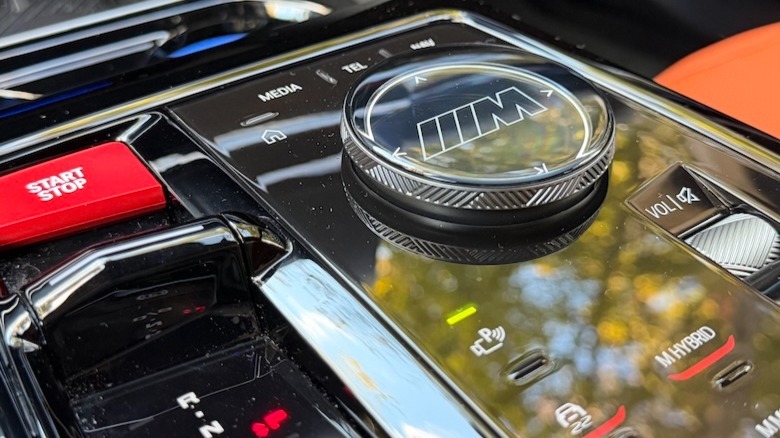
Yes, you can make those same tweaks in the BMW, but you either have to dig through the touchscreen to do it, or have preemptively set up the red shortcut buttons on the steering wheel to suitable settings.
 Chris Davies/SlashGear
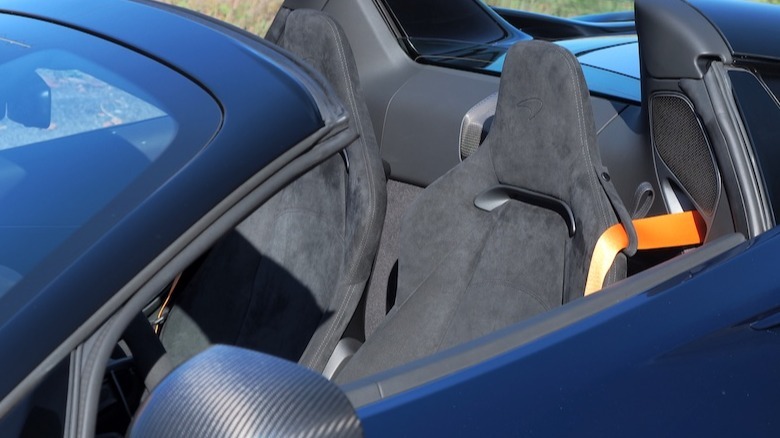
So finagled, maximum powertrain performance could be readily paired with a softer suspension setup: vital, since on unruly country road surfaces, the Artura at its stiffest felt like it was actively working against me (and definitely had a vendetta against my spine). Speed is — even in the most placid mode — delivered like a whipcrack, and you can carry far, far more of it into turns than you'd ever expect. Only a slightly tedious droning note from the V6 when you're cruising around 50-55 mph spoils the mood.
Expensive ways to try to do everything
 Chris Davies/SlashGear
Make no mistake, there's trick engineering aplenty in both of these plug-in hybrids. That unlocks a surprising degree of day-to-day enjoyment, too. The M5 wafts like, well, a 5 Series; its cabin is lavishly outfitted; its gadgetry plentiful (whether that's a pro or a con depends on your tech tastes, of course). McLaren's convertible can be easy to drive, too; though it only has seating for two, the cabin feels spacious, and its technology is straightforward.
 Chris Davies/SlashGear
Better endearing the Artura Spider is the fact that McLaren has non-electrified alternatives also capable of rearranging your face. The 750S Spider is, on paper, a whole lot more expensive, though its $345k starting price is within spitting distance of this particular well-equipped Artura Spider.
 Chris Davies/SlashGear
Despite having a 4.0-liter twin-turbo V8 with 740 horsepower, though, the 750S Spider is actually 269 pounds lighter; it also does 0-60 in about 2.7 seconds. It doesn't offer the sinuous EV-only mode to ease you through the suburbs, however.
Potent doesn't equal perfect
 Chris Davies/SlashGear
BMW fans, though, don't get such a choice. On the one hand, this latest M5 feels like an inevitable escalation when power figures are the metric by which sports sedans live and die. It has More Horsepower than the old M5 — which offered 626 hp in M5 CS form — and so it is automatically better. Yet it's about 1,200 pounds heavier than that M5 CS, too, and there's only so far that powertrain and chassis magic can get you.
 Chris Davies/SlashGear
The Artura and the seventh-generation M5 are technological triumphs, certainly. They showcase how effective an e-motor can be in tandem with a gas engine; being able to quickly and conveniently fill up a gas tank and get back on the road is a boon. They're easy to drive fast and easy to drive slow, and though a McLaren's flip-up doors will always have the edge in parking lot drama, both cars will inspire plenty of curiosity and questions.
 Chris Davies/SlashGear
Yet the same criticisms oft leveled at cheaper PHEVs — their weight, their complexity, the occasional misstep between the gas and electric halves — holds true here, with these six-figure examples. I'm glad these potent, portly cars exist, but they're also proof that electrification isn't a magic bullet for making high-performance cars with no drawbacks.