
- Home
Edition
Africa Australia Brasil Canada Canada (français) España Europe France Global Indonesia New Zealand United Kingdom United States Edition:
Global
Edition:
Global
- Africa
- Australia
- Brasil
- Canada
- Canada (français)
- España
- Europe
- France
- Indonesia
- New Zealand
- United Kingdom
- United States
Academic rigour, journalistic flair
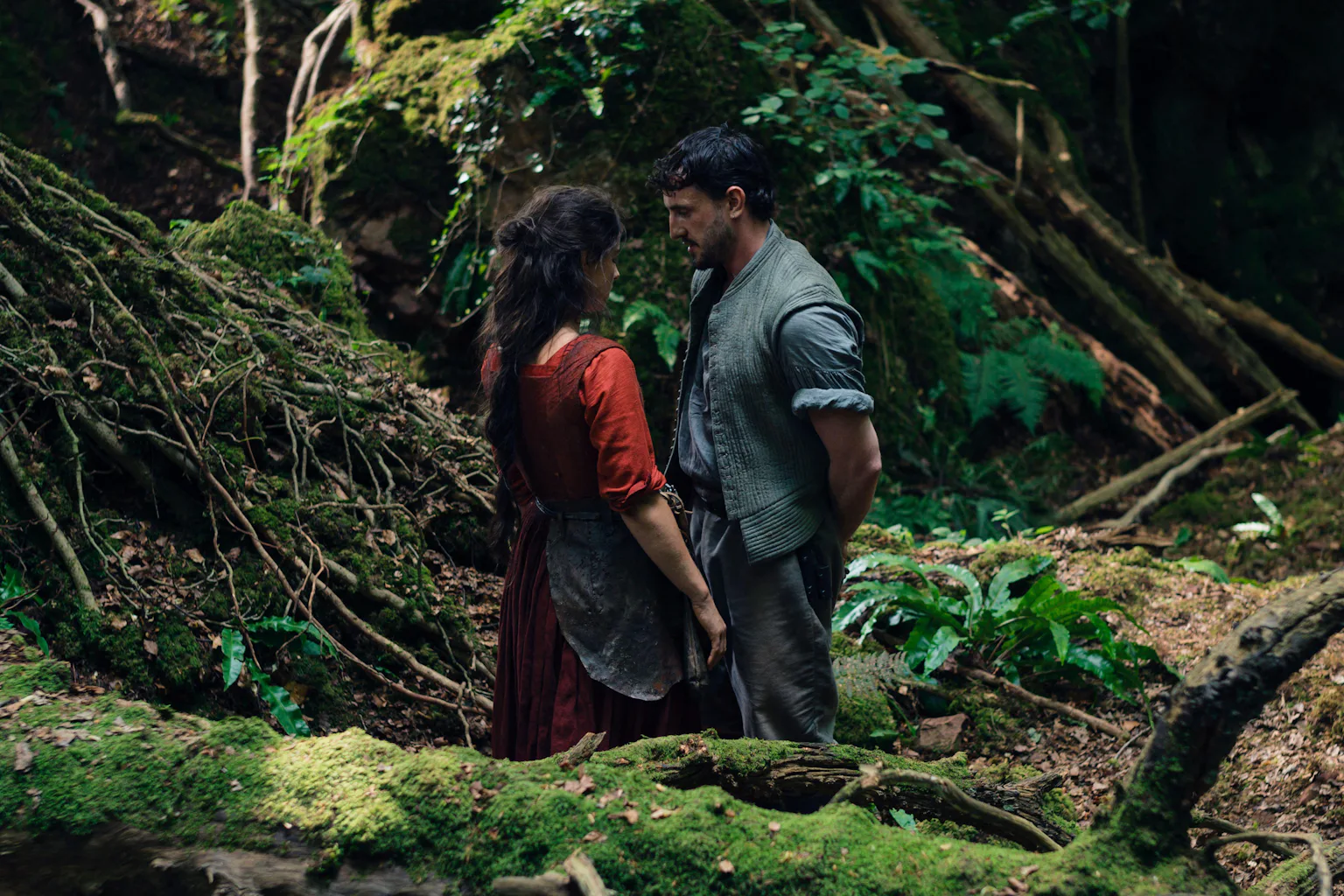 Hamnet follows Agnes and her husband William Shakespeare as they endure the devastating loss of their son.
BFA/ Agata Grzybowska/Focus Features/Alamy
‘That’s not how I pictured it’ – why book-to-film adaptations so often disappoint
Published: January 9, 2026 2.13pm GMT
Julia Thomas, Cardiff University
Hamnet follows Agnes and her husband William Shakespeare as they endure the devastating loss of their son.
BFA/ Agata Grzybowska/Focus Features/Alamy
‘That’s not how I pictured it’ – why book-to-film adaptations so often disappoint
Published: January 9, 2026 2.13pm GMT
Julia Thomas, Cardiff University
Author
-
 Julia Thomas
Professor of English Literature, Cardiff University
Disclosure statement
Julia Thomas does not work for, consult, own shares in or receive funding from any company or organisation that would benefit from this article, and has disclosed no relevant affiliations beyond their academic appointment.
Partners

Cardiff University provides funding as a founding partner of The Conversation UK.
View all partners
DOI
https://doi.org/10.64628/AB.dasvvkcuq
https://theconversation.com/thats-not-how-i-pictured-it-why-book-to-film-adaptations-so-often-disappoint-272960 https://theconversation.com/thats-not-how-i-pictured-it-why-book-to-film-adaptations-so-often-disappoint-272960 Link copied Share articleShare article
Copy link Email Bluesky Facebook WhatsApp Messenger LinkedIn X (Twitter)Print article
As Hamnet arrives on the big screen, many fans of the book may feel a familiar mix of excitement and trepidation. They may wonder how the film will bring to life Maggie O'Farrell’s intimate portrayal of Shakespeare’s wife, Agnes, and the loss of their son.
There is the thrill of seeing a beloved story imagined on screen. But there is also a quieter fear: that the film will not look like the version already playing in our heads.
For many of us, novels are not just read. They are seen. We carry their worlds in our “mind’s eye”, which is a phrase borrowed, fittingly, from Hamlet itself. When a film adaptation fails to match those private images, disappointment often follows. This is the moment when a viewer may find themselves thinking, or saying aloud, “that’s not how I pictured it”.
Read more: Hamnet: by centring Anne Hathaway, this sensuous film gives Shakespeare's world new life
The source of this reaction lies in the cognitive process of reading. For most readers, this involves the creation of images in the mind’s eye. We picture scenes, events and characters, however vague or vivid these mental impressions might be. Mental visualisation can form part of the pleasure of reading, immersing the reader in the novel.
We rarely stop to examine these inner images or even notice that we are forming them. Often, we become aware of them only when they are disrupted and when the images on screen fail to align with what we had imagined. It is precisely this gap between mental and material images that may lead to feelings of dissatisfaction, disappointment and even disorientation.
Film adaptations can provoke the “that’s not how I pictured it” reaction, but the complaint itself has a much longer history. It stretches back to the pre-cinematic world of the 19th century, as my research shows. At that time, illustrations – the pictures that appeared in books, magazines and newspapers – were increasingly viewed as a threat to readers’ mental imagery.
The 19th century was the great age of illustration. New printing technology enabled an unprecedented proliferation of images, with texts, from novels to newspapers, adorned with pictures. This expansion brought with it new anxiety about the effects of illustration on readers’ mental visualisation.
 George Cruikshank depicts Fagin, a character from Charles Dickens’ Oliver Twist.
The History Collection/Alamy
George Cruikshank depicts Fagin, a character from Charles Dickens’ Oliver Twist.
The History Collection/Alamy
When pictures appeared alongside words, as in the case of Charles Dickens’s novels, critics worried that they prevented readers from mentally picturing scenes for themselves. Once a reader had seen illustrator George Cruikshank’s images of Fagin, it was difficult to imagine the character in any other way.
A particular problem arose with works that were first published without illustrations and later re-published in illustrated form. By this point, readers had already mentally visualised the characters and scenes for themselves. Many described feelings of displeasure and disturbance when illustrations failed to coincide with what they had imagined.
A contemporary reviewer of an illustrated novel in 1843 observed that, for readers who had already visualised a novel’s characters, it was very difficult to reconcile themselves to new pictures. Another commented that such illustrations were rarely encountered “without disturbance and discomfort”.
Even the artist Edward Burne-Jones, who illustrated several classic texts, including the works of Chaucer, acknowledged the disappointment that arose when illustrative images failed to coincide with mental ones.
Aphantasia
Yet not everyone responded to illustrations with disappointment. For many readers, illustrated texts were a source of pleasure, especially for those who lacked the capacity to form mental pictures while reading. The term “aphantasia” has only recently been coined to describe the absence of a mind’s eye. It is estimated that around 4% of the global population do not mentally visualise.
Although the word itself was not used in the 19th century, debates about illustrated books frequently acknowledged the value of images for readers who did not mentally picture the words. George du Maurier, himself an illustrator and novelist, argued that illustrators worked primarily for such readers, whom he believed to be the majority.
Read more: Aphantasia: ten years since I coined the term for lacking a mind’s eye – the journey so far
For aphantasic readers and viewers, the problem of visual mismatch does not arise, since no prior images are formed. In the 19th century, such readers could read illustrated books without the discomfort reported by others, just as they can watch contemporary film adaptations without pre-existing visual expectations. In this sense, screen adaptations may be not only less jarring, but also positively liberating, transforming the words on the page into images that the imagination does not supply.
For those of us who do visualise as we read, however, disappointment at a film adaptation need not signal failure, either of the film or of the imagination. On the contrary, it offers a rare glimpse into the workings of the mind’s eye, revealing just how personal and embodied our engagement with novels really is. Rather than protesting “that’s not how I pictured it”, we might pause to ask why it isn’t, and what that discrepancy reveals about what we see, and what we don’t see, when we read.
- Film
- Shakespeare
- Illustration
- Film adaptations
- Give me perspective
Events
Jobs
-
 Postdoctoral Research Fellow or Research Fellow
-
Research Fellow - AI and Digital Capabilities
-
Data & Reporting Analyst
-
Lecturer/Senior Lecturer, Terrestrial Ecology
-
Video producer
 Postdoctoral Research Fellow or Research Fellow
 Research Fellow - AI and Digital Capabilities
 Data & Reporting Analyst
 Lecturer/Senior Lecturer, Terrestrial Ecology
 Video producer
- Editorial Policies
- Community standards
- Republishing guidelines
- Analytics
- Our feeds
- Get newsletter
- Who we are
- Our charter
- Our team
- Partners and funders
- Resource for media
- Contact us
-
-
-
-
Copyright © 2010–2026, The Conversation