- Home
Edition
Africa Australia Brasil Canada Canada (français) España Europe France Global Indonesia New Zealand United Kingdom United States Edition:
Global
Edition:
Global
- Africa
- Australia
- Brasil
- Canada
- Canada (français)
- España
- Europe
- France
- Indonesia
- New Zealand
- United Kingdom
- United States
Academic rigour, journalistic flair
 iHumnoi/Shutterstock
The surprising way you could improve your finances in 2026, according to research
Published: January 9, 2026 2.13pm GMT
Dominik Piehlmaier, Cambridge Judge Business School
iHumnoi/Shutterstock
The surprising way you could improve your finances in 2026, according to research
Published: January 9, 2026 2.13pm GMT
Dominik Piehlmaier, Cambridge Judge Business School
Author
-
 Dominik Piehlmaier
Visiting Fellow, Cambridge Judge Business School
Disclosure statement
Dominik Piehlmaier does not work for, consult, own shares in or receive funding from any company or organisation that would benefit from this article, and has disclosed no relevant affiliations beyond their academic appointment.
Partners

University of Cambridge provides funding as a member of The Conversation UK.
View all partners
DOI
https://doi.org/10.64628/AB.dvxc4ssqx
https://theconversation.com/the-surprising-way-you-could-improve-your-finances-in-2026-according-to-research-272739 https://theconversation.com/the-surprising-way-you-could-improve-your-finances-in-2026-according-to-research-272739 Link copied Share articleShare article
Copy link Email Bluesky Facebook WhatsApp Messenger LinkedIn X (Twitter)Print article
When people talk about improving financial literacy, the conversation often focuses on teaching practical skills: how to budget, how to save, how to avoid debt. These lessons feel concrete and actionable. But recent research suggests that the most effective way to change your financial behaviour might be something far less obvious: learning in a more abstract, flexible way.
The new year is often a time when people vow to get a grip on their personal finances. My recent study with my colleague Dee Warmath explored why traditional financial education often fails to translate into good habits that leave us better off.
We found that while people generally do need to improve their financial literacy, simply teaching facts and formulas isn’t enough. What really matters is how adaptable your financial knowledge is when life throws you a curveball.
Most financial education programmes, such as those offered to undergraduate students at university, rely on explicit learning. This means teaching rules and definitions, then testing whether you can recall them. That approach works well for exams, but real life rarely looks like a textbook. You might know the importance of saving, but when your car breaks down or a friend invites you on a last-minute trip, those rules can feel distant.
Our study argues that knowledge exists on a continuum. At one end is the rigid, factual understanding of things like compound interest and inflation. At the other is flexible knowledge – that is to say, the ability to apply principles in unfamiliar situations. We hypothesised that the more flexible your knowledge, the more likely you are to act on it when circumstances change.
Putting it to the test
To see if this theory held up, we ran a multi-session experiment with undergraduate students, most aged 18-22 and from various degree programmes (excluding finance majors). One group received traditional lessons focused on explicit knowledge of finance: definitions, formulas and quizzes. Another group learned through semi-flexible methods, practising with varying scenarios. A third group engaged in fully flexible learning, tackling hands-on challenges that mirrored real-world dilemmas.
In the fully flexible learning group, participants practised strategic thinking through these hands-on challenges. This included allocating limited resources across competing priorities or working through ambiguous scenarios with no single “right” answer. This encouraged them to weigh trade-offs, anticipate consequences and adapt when conditions change. The goal was to build mental agility, so that they learned how to approach complex choices rather than rely on fixed formulas.
Students chose between two distinct options for how to allocate resources, each with trade-offs between immediate rewards and delayed outcomes. As an example, one choice offered an immediate payment of US$45 (£33) for taking part in the experiment or a delayed payment of US$54 five days later. This represented an annual interest rate of more than 1,000%.
Overall, the results were striking. Students who learned in this more abstract, adaptable way were significantly more likely to adopt positive financial behaviour. This was measured by the likelihood of identifying and choosing the option that would maximise their payoffs. They didn’t just know what to do, they actually did it.
In contrast, those who focused on specific lessons seemed to struggle to apply their knowledge outside the classroom. Our research suggests that abstract learning helps you build mental models that can be reshaped as situations change.
Instead of memorising a rule like “always save 10% of what you earn”, you learn how to think about trade-offs, priorities and long-term goals. That mindset makes it easier to navigate unexpected expenses or tempting splurges.
In other words, teaching people what to think is less powerful than teaching them how to think. Many universities offer free online courses on how to use these flexible tools in the course of your daily life.
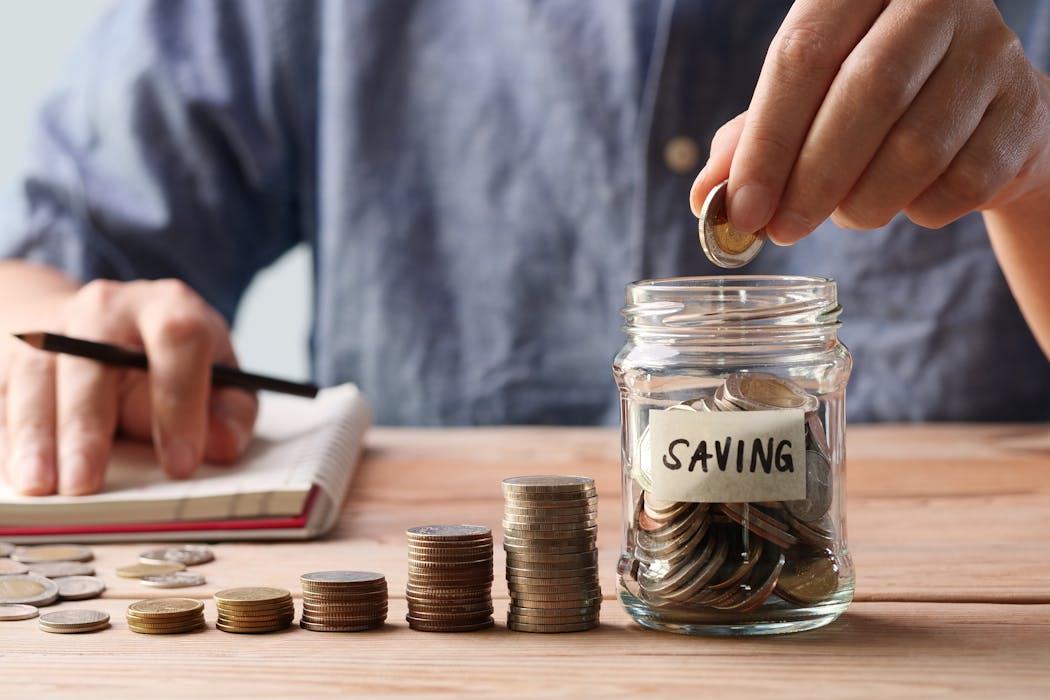
 Saving is good but managing financial curveballs is better.
Prostock-studio/Shutterstock
Saving is good but managing financial curveballs is better.
Prostock-studio/Shutterstock
If we want financial education to work, programmes need to move beyond rote learning. Here are a few ideas inspired by our study:
- use scenario-based exercises that mimic real-life challenges
- encourage reflection so learners connect principles to their own circumstances
- focus on problem-solving rather than memorising, helping students adapt when rules don’t fit perfectly.
This approach doesn’t just apply to money. Whether you’re teaching healthy living habits, sustainability or digital safety, the same principle holds. Flexible knowledge drives behaviour change.
Improving financial literacy is still important, but it’s not the whole story. The real breakthrough comes when education equips people to handle complexity and uncertainty. Life rarely follows a script, and neither should our learning.
So if you want to improve your finances, don’t just learn the tips and tricks. Seek out experiences that challenge you to think broadly and adapt. It turns out that the most practical skill you can learn might be the ability to apply abstract ideas when reality gets messy.
- Money
- Saving
- Personal finance
- Spending
- Financial literacy
- Financial education
- Budgeting
- Educate me
Events
Jobs
-
 Postdoctoral Research Fellow or Research Fellow
-
Research Fellow - AI and Digital Capabilities
-
Data & Reporting Analyst
-
Lecturer/Senior Lecturer, Terrestrial Ecology
-
Video producer
 Postdoctoral Research Fellow or Research Fellow
 Research Fellow - AI and Digital Capabilities
 Data & Reporting Analyst
 Lecturer/Senior Lecturer, Terrestrial Ecology
 Video producer
- Editorial Policies
- Community standards
- Republishing guidelines
- Analytics
- Our feeds
- Get newsletter
- Who we are
- Our charter
- Our team
- Partners and funders
- Resource for media
- Contact us
-
-
-
-
Copyright © 2010–2026, The Conversation