
In 2025, 7,000 Canadian restaurants shut their doors across the country.

That’s according to a new study out of Dalhousie University, which projects 4,000 more will suffer the same fate this year.
The industry as a whole has struggled since 2019. At that time, there were about 98,000 restaurants operating in Canada. If these new projections are realized, there will be fewer than 84,000 by the start of 2027.
Manitoba’s restaurant sector is certainly feeling the challenges as well.
Before the COVID-19 pandemic, around 12 per cent of restaurants in the province were losing money or breaking even. By the end of 2025, a year that saw a 2.3-per cent overall drop in sales for the sector, that number was 41 per cent.
“It tugs at my heartstrings,” says Manitoba Restaurant and Food Services Association CEO Shaun Jeffrey. “It’s based on the changes in consumer spending, the lowering of costs and spending when you do go out, and the changing of trends, like the reduction in the consumption of alcohol.”
Story continues below advertisementIn Manitoba, the challenges have meant the industry has had to get a little more creative to help the bottom line. Takeout and delivery, which many restaurants began to excel at during the pandemic, has become a norm in the sector, while catering options in the province are growing.

Get daily National news
Get the day's top news, political, economic, and current affairs headlines, delivered to your inbox once a day. Sign up for daily National newsletter Sign Up By providing your email address, you have read and agree to Global News' Terms and Conditions and Privacy Policy.Still, Jeffrey says the best case scenario has customers coming in for a dining experience.
“We want you in our restaurant, we want to see your smiling face, we want to be able to provide you the best quality product, and that’s only going to be done when you’re sitting in a restaurant,” Jeffrey says.
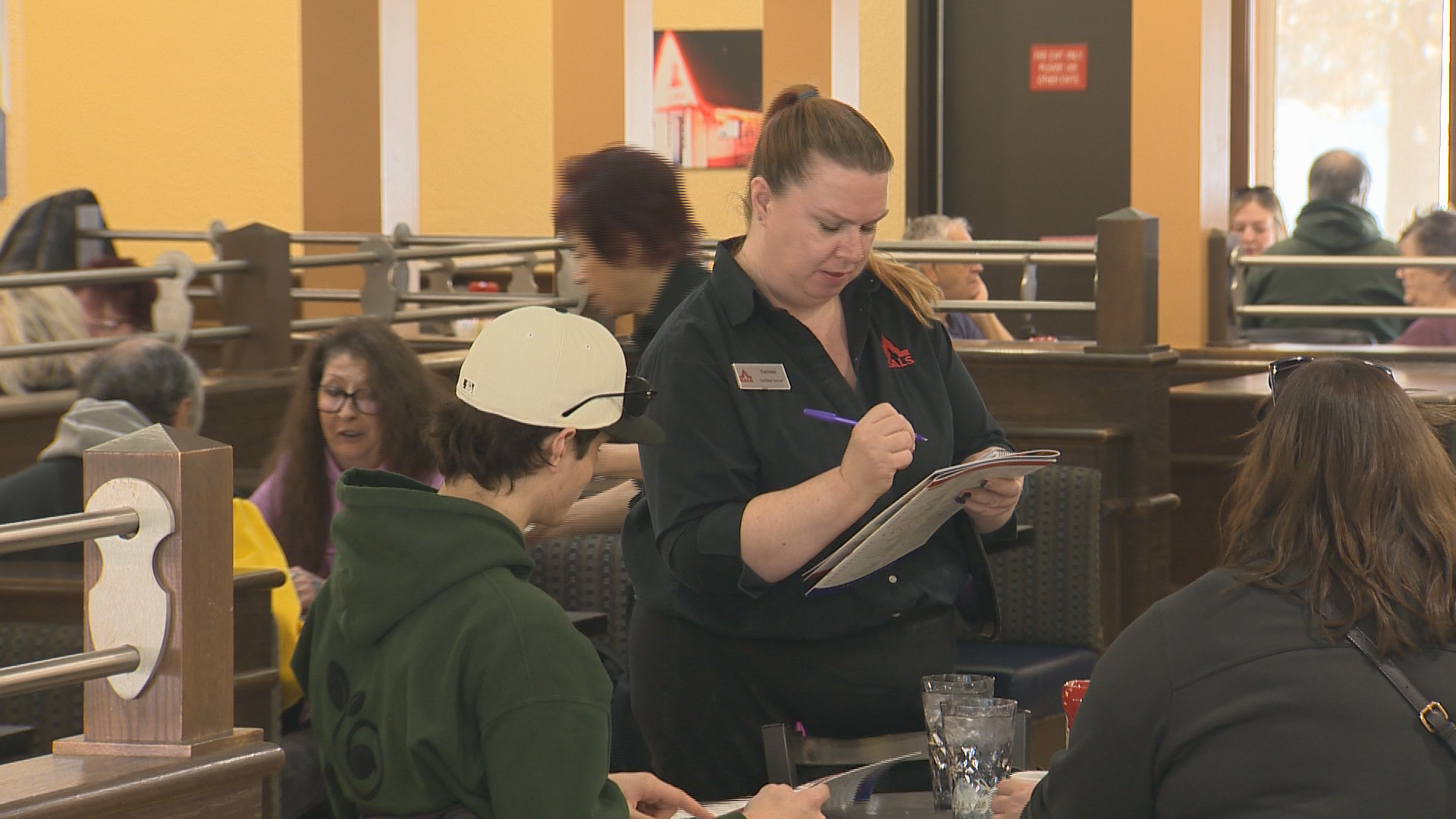
For Salisbury House, which has operated in Winnipeg for more than 95 years, affordable options for customers have become vital. Many have noticed rising prices across the board and now have to be more strategic with eating out.
 View image in full screen
Waitress takes order at Salisbury House.
Josh Arason / Global News
View image in full screen
Waitress takes order at Salisbury House.
Josh Arason / Global News
Operations Manager Dave Petrishen says it’s never easy to balance affordable food options while still making the restaurant money, but it’s become a necessity in the industry.
Trending Now-
![]() Congresswoman plans to impeach ‘incompetent’ DHS Secretary Kristi Noem
Congresswoman plans to impeach ‘incompetent’ DHS Secretary Kristi Noem
-
![]() Man charged after over 100 human skeletal remains found in Pennsylvania home
Man charged after over 100 human skeletal remains found in Pennsylvania home
 Congresswoman plans to impeach ‘incompetent’ DHS Secretary Kristi Noem
 Man charged after over 100 human skeletal remains found in Pennsylvania home
“What people are really looking for now is value, because the dollar is really getting stretched,” Petrishen says. “People see it at the grocery stores, they saw it at Christmas — every time you look, gas prices, everything goes up so what people are looking for is the best bang for their buck.”
According to Dalhousie University researcher and professor Sylvain Charlebois, it’s the smaller, locally-owned restaurants that have been feeling the brunt of these closures.
“When you look at factors impacting the industry, input costs are certainly one. When it comes to procurement, networks and franchises are typically better equipped to cope with higher input costs,” Charlebois says.
“Independents tend to not have that sort of support, unfortunately. That’s really the sad part as far as I’m concerned, because often independents are the ones providing more food innovation.”
Manitoba’s restaurant industry contributes $3.2-billion annually to the provincial economy.
 2:19
Tariff impacts on Manitoba food and drink industry
2:19
Tariff impacts on Manitoba food and drink industry