- News
- World
- Americas
- US politics
Experts call use of deadly force into question as Trump administration insists victim committed an act of terrorism
Alex Woodward in New York Friday 09 January 2026 20:03 GMT- Bookmark
- CommentsGo to comments
Bookmark popover
Removed from bookmarks
Close popover
 CloseMayor: 50% of the shootings this year in Minneapolis have been ICE
Sign up for the daily Inside Washington email for exclusive US coverage and analysis sent to your inbox
Get our free Inside Washington email
Get our free Inside Washington email
Email*SIGN UPI would like to be emailed about offers, events and updates from The Independent. Read our Privacy notice
Donald Trump’s administration has repeatedly claimed that a federal officer who fatally shot Renee Good in Minnesota was justified, alleging that the 37-year-old mother of three was a “violent rioter” who intentionally used her car to ram the agent in an act of “domestic terrorism.”
The officer, who has been identified as Jonathan Ross, fired three shots because he feared for his life, according to administration officials.
But former Immigration and Customs Enforcement officers and police misconduct experts dispute the administration’s insistence that the use of deadly force was justified and questioned the officer’s behavior.
“Law enforcement policy should always be about using the least amount of force and preserving people’s lives,” Diane Goldstein, a former police lieutenant and executive director of the Law Enforcement Action Partnership, told USA Today.
The footage suggests “a lack of supervision, a lack of training and a lack of understanding of what other tactics are available to deescalate these types of situations,” she said.
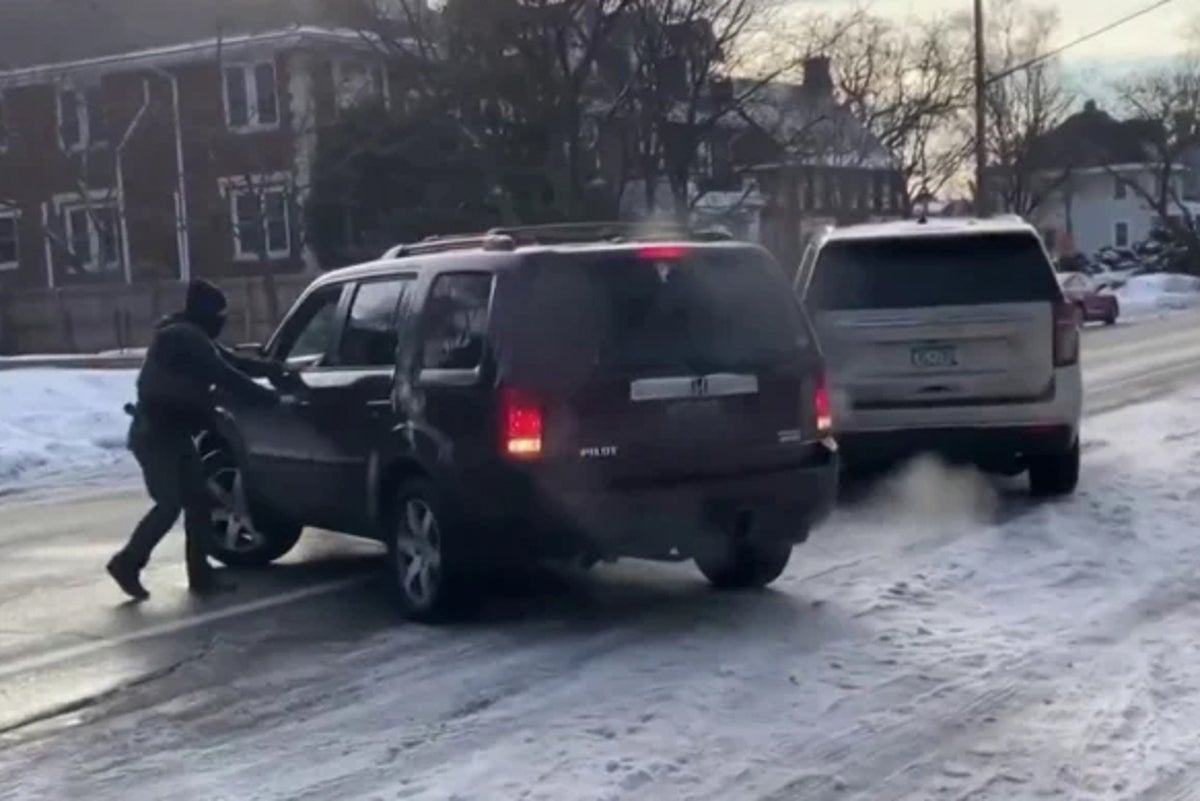
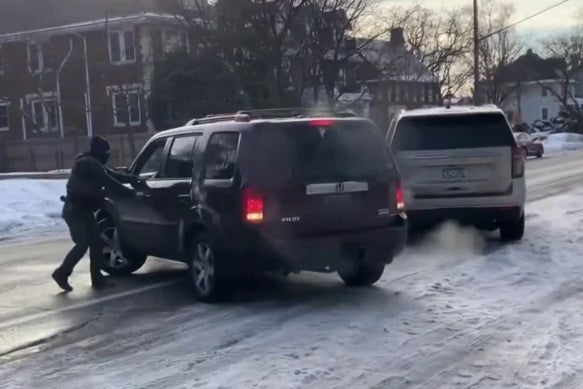 open image in galleryFormer law enforcement officials and experts dispute the Trump administration’s claims that the ICE officer who fatally shot Rennee Good was justified (Social media)
Video analysis from footage taken by several witnesses — as well footage from Ross himself, who was filming his interaction with Good and her partner with one hand while grabbing his firearm and shooting at her with his other — shows masked ICE officers approaching a Honda Pilot in the middle of a residential street.
Ross can be seen getting out of his car and leaving the door open as he approaches Good. Her partner is walking around Good’s car, filming Ross. Meanwhile, another vehicle pulls up to the scene to the left of Good’s car, and two officers exit and approach her while she is sitting in the driver’s seat.
An officer can be heard saying “get out of the f****** car” while an agent puts a hand on the opening of the driver’s side window and pulls on the outside handle.
At the same time, Good’s car backs up slightly, then pulls forward and begins to veer to the right. As her car moves forward, turning slightly to get around another SUV to her right, Ross moves to the front of her car.
As her car pulls forward and begins to turn, Ross fires three shots. Her car accelerates and crashes into a parked car further down the street.
“I don’t hear anybody (saying) like, ‘Hey, police!’” retired ICE agent Eric Balliet told CBS News.
“You saw what could be easily identified as four ICE officers. And they’re all experiencing, to a greater or lesser extent, the same set of operative facts, the same factual stimuli,” veteran Minneapolis-area police misconduct lawyer Robert Bennett told Mother Jones.
“But only one officer, seeing the set of circumstances, picked up his weapon. None of the other officers did. That’s a bad fact [for Ross],” he said.
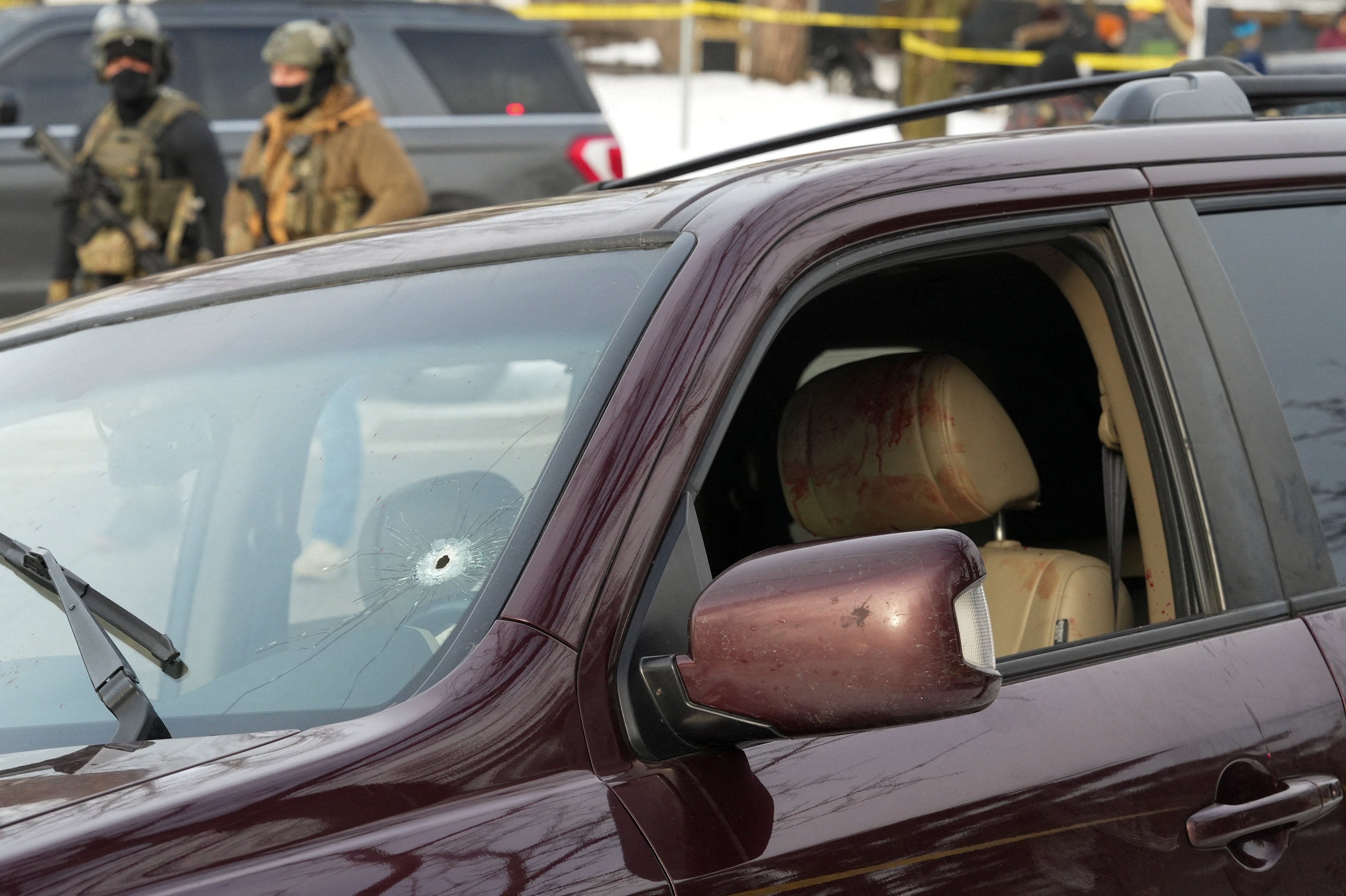 open image in galleryJonathan Ross fired three shots at Renee Good as she drove away from ICE officers, which law enforcement experts say falls outside guidelines for using deadly force (Reuters)
Balliet also said he did not understand why an officer would put himself, on foot, “in front of a moving, running or occupied vehicle.”
“You’re almost inducing a shooting if that person decides to flee," he told USA Today. “If someone is fleeing, that is not a justification for the use of deadly force. The threshold becomes: is your life in imminent danger or is someone else’s in imminent danger?”
In a major decision last year, the Supreme Court unanimously rejected arguments that an officer who fatally shot a man in Texas was justified after he blindly fired two shots into a man’s car as he drove away.
The justices rebuffed arguments that focused on “the moment of the threat” rather than “the totality of the circumstances,” the standard that the court argued should be applied in use-of-force cases.
“It’s a shooting case where the officer walked around the car, [lunged and jumped onto the door sill], and put himself in harm’s way. You can’t bootstrap your own bad situation [to] allow a use of force,” Bennett told Mother Jones.
Department of Justice policy prohibits officers from firing at a moving vehicle unless there is “no other objectively reasonable means of defense appear to exist, which includes moving out of the path of the vehicle.”
Homeland Security’s use-of-force policy similarly states that firing at a driver is “prohibited” unless there’s a “reasonable belief that the subject of such force poses an imminent threat of death or serious bodily injury.”
Deadly force is forbidden when solely trying to stop a car, according to federal guidelines.
Balliet also noted that it’s not uncommon for officers to encounter demonstrators; it is also legal to film and berate them, which Trump administration officials have labeled “assault” that endangers them.
“I hate to say it, but you have to tune out the noise,” Balliet said. “You have to focus on your objective.”
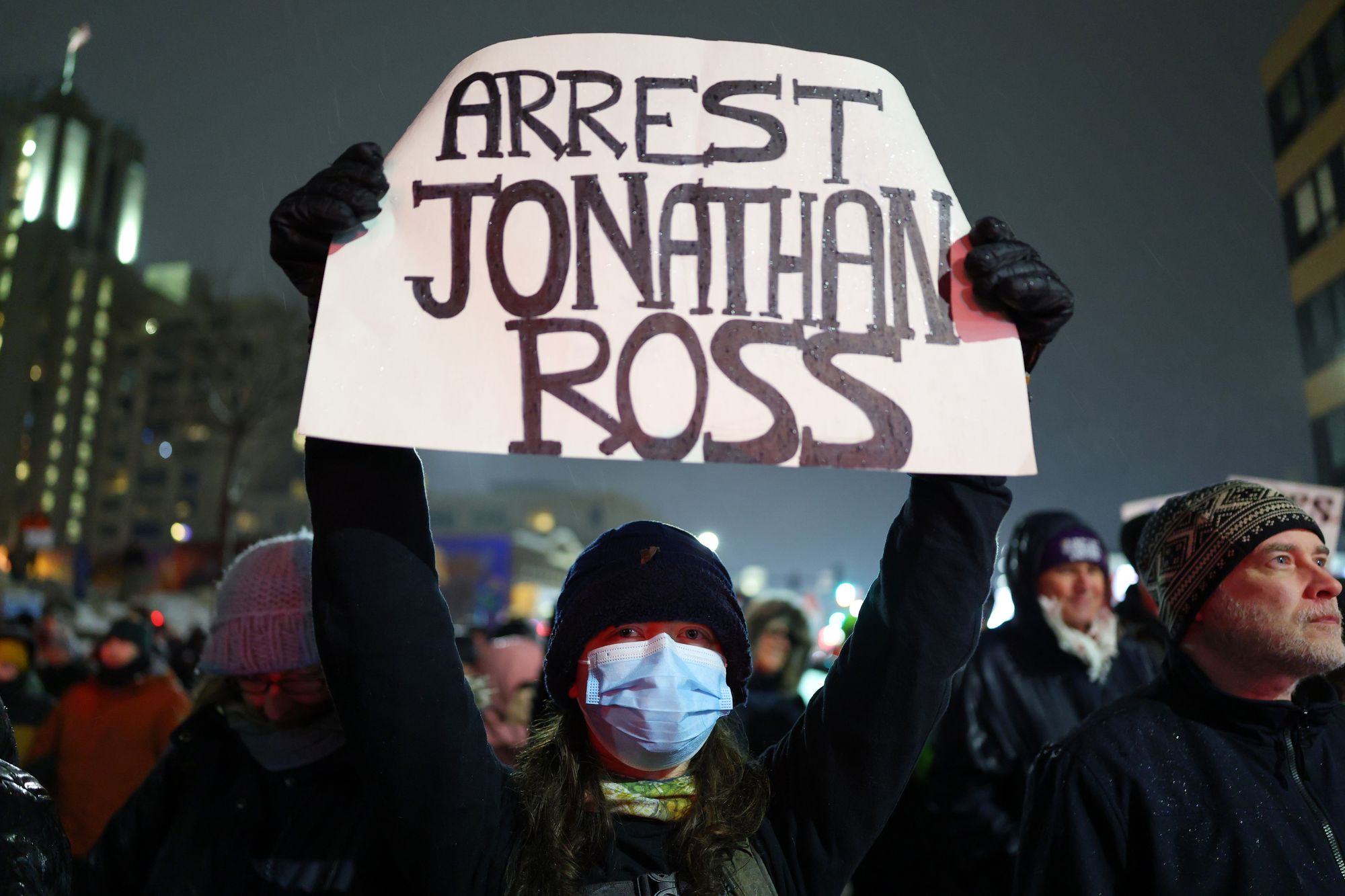 open image in galleryAdvocates have demanded Minnesota prosecutors file charges against Ross for Good’s killing, while federal law enforcement agencies handle an investigation that is not expected to produce any misconduct allegations against him (AP)
Vice President JD Vance also falsely claimed Ross has “absolutely immunity” from prosecution, should state or local law enforcement agencies pursue a criminal investigation.
“The idea that a federal agent has absolute immunity for crimes they commit on the job is absolutely ridiculous,”Michael J.Z. Mannheimer, a constitutional law expert at Northern Kentucky University’s Salmon P. Chase College of Law, told CNN.
While Minnesota could charge the officer, he could seek to move the case to federal court and argue he is immune from prosecution. To prevail in a potential case, the state would have to show his actions fell outside the scope of his official duties, were objectively unreasonable or clearly unlawful.
Federal prosecutors could bring a case but would need to show that the officer knew his conduct was unlawful or that he acted with reckless disregard for the constitutional limits of his authority. But the Trump administration has not shown an appetite for bringing a case against law enforcement.
Federal officers are also generally immune from civil lawsuits unless they are shown to have violated a constitutional right.
The FBI is investigating the shooting and has allegedly cut out local law enforcement and the Minnesota Bureau of Criminal Apprehension from the case.
“I can't speak to why the Trump administration is doing what it’s doing or says what it says,” Hennepin County Attorney Mary Moriarty told reporters Friday. “I can say the ICE officer does not have complete immunity here.”
More about
Immigration and Customs EnforcementDonald TrumpHomeland SecurityMinnesotaMinneapolisJoin our commenting forum
Join thought-provoking conversations, follow other Independent readers and see their replies
Comments