- Voices
- The Independent View
Editorial: Iran’s unremittingly harsh leadership faces one of the most serious challenges to its theocratic rule since the Islamic Republic was established in 1979. After weeks of nationwide protests, the ayatollahs’ spell could soon be broken – which is how counter-revolutions begin, and governments fall
Friday 09 January 2026 21:08 GMT- Bookmark
- CommentsGo to comments
Bookmark popover
Removed from bookmarks
Close popover
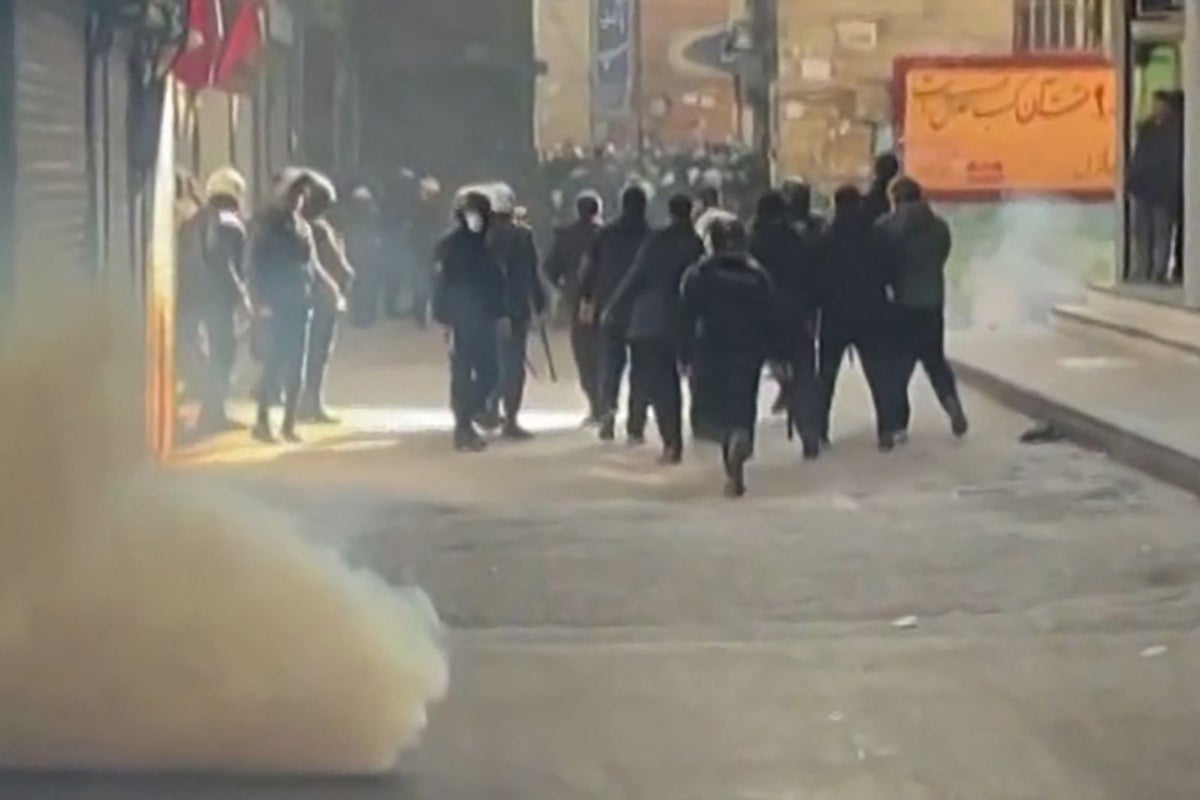
 CloseIran authorities cut internet as buildings are set on fire during mass protests in Tehran
The best of Voices delivered to your inbox every week - from controversial columns to expert analysis
Sign up for our free weekly Voices newsletter for expert opinion and columns
Sign up to our free weekly Voices newsletter
Email*SIGN UPI would like to be emailed about offers, events and updates from The Independent. Read our Privacy notice
Even in more normal times, it is difficult to gauge the mood of the Iranian people. The repression they endure is intense, and foreign media access minimal.
Things are unusually opaque now, because of a government block on internet and international telephone access. However, that in itself is a sign of the seriousness of the situation so far as the Iranian leadership is concerned.
Hence, also, the special television broadcast by the supreme leader, Ayatollah Ali Khamenei. At 86, the religious head of the country shows no sign of mellowing and, predictably, accuses those involved in demonstrations around the country of being “mercenaries for foreigners”. He has blamed Donald Trump for fomenting trouble, and said that the US president’s hands are “stained with the blood” of Iranians.
Khamenei’s lurid language is more uncompromising than that emanating from Iran’s “civilian” leader, president Masoud Pezeshkian, who at least recognises the possibility of “genuine” grievance. Traditionally, in Iran’s unusual hybrid system of governance, the theocratic arm of the state tends to prevail over those civilian organs that are at least nominally elected. That would not help the regime to survive this time round.
Plainly, Iran’s leaders are collectively faced with one of the more serious challenges to the authority of the Islamic Republic since the overthrow of the Shah and the original revolution in 1978-79. That was also a confused, unpredictable affair that some hoped would lead to a more liberal and modern society, but ended up with the ayatollahs imposing their own brand of unrelenting harsh discipline.
Now in their third week, the protests echo those that preceded the revolution of almost four decades ago in both their size and their breadth. Now, as then, they are galvanising many older Iranians who would never think of themselves as rebels, let alone counter-revolutionaries. They are attacking the symbols of the Islamic Republic – posters of the Ayatollah and the national flag. It is not, in other words, just the young, women or students who have had enough: the urban population as a whole obviously has, and perhaps this is the case in the more conservative parts of the countryside, too.
From the verified videos and accounts that have emerged, some via Elon Musk’s Starlink satellite system, the police seem incapable of controlling the growing unrest. As in the late 1970s, some of the police and even the Revolutionary Guard must be wondering whose side they should be on. The army, too, must be watching proceedings carefully. The spell of the regime has at least been weakened, if not yet broken. That is how revolutions begin and governments fall.
The reason why this revolt may prove larger and more decisive than previous outbreaks of dissent is fairly apparent. The main issue is the economy, and the nation’s continuing impoverishment as sanctions bite harder – in a country rich with resources and culture. The incompetence of the government has destroyed the currency and diminished living standards, even for the middle classes. Only those in favoured positions, notably the Islamic Revolutionary Guard Corps, are protected from economic hardship.
Excluding the elites and their agents, the whole population is affected by this crisis in a way that wasn’t the case with the “Woman, Life, Freedom” movement a few years ago. That was a powerful backlash against the symbolic murder of a young woman, Mahsa Amini, at the hands of the religious police for the “crime” of not wearing her hijab “correctly”.
The protests may already be more numerous than the last serious threat to the Islamic Republic in 2009, when Iran’s then president Mahmoud Ahmadinejad stole the election.
The prestige of the Iranian government has also been badly damaged by a series of humiliations inflicted by the Israelis and the Americans – defeats in Gaza and elsewhere of Iranian-linked groups such as Hamas, Hezbollah and the Houthis, including one assassination on Iranian soil, plus the devastating bombing of Iran’s nuclear facilities. That also exposed Iran’s weak air defences.
Suddenly, Tehran looks vulnerable as never before. President Trump’s recent warnings about the lethal consequences of protesters being harmed are realistic, and may also have emboldened them. So, far from being the “Great Satan”, this most aggressive of US presidents may be seen by some Iranians as more of a saviour. That so many are calling for the restoration of the monarchy and the return of the late Shah’s son, Reza Pahlavi, is also significant – further evidence that radical moves may be on the way.
Regime change in Iran, secured by and for the Iranians themselves, would be welcome. The Islamic Republic has abused its people, taken hostages, sponsored terrorism, and promoted instability in the region and beyond for years, not least by fighting a long war with Iraq.
It has more recently acted as a useful ally of the Russians, along with another of the Kremlin’s client petro-states, Venezuela. Iran has actively helped Vladimir Putin with drones and money to prosecute his war in Ukraine. That the fall of the Islamic Republic would cause jubilation in Washington and Jerusalem is not a reason to oppose or regret it.
The Iranian people could be some of the most prosperous and democratic on the planet if they were given the opportunity to be so. But there is also the obvious danger that the nation could fall into chaos and even civil war, with the accompanying regional and economic harm that would follow disruption to oil supplies.
The counter-revolution may be at hand, and if it is, the world should hope that it is swift and soon sets about building a new, free Iran. If not, then all concerned should prepare for the very worst.
More about
IranAyatollah Ali KhameneiMiddle EastDonald TrumpTerrorismIslamicJoin our commenting forum
Join thought-provoking conversations, follow other Independent readers and see their replies
Comments