
- News
- World
- Europe
The EU’s foreign policy chief says the strike is meant as a warning to both Europe and the US
Alex Croft Friday 09 January 2026 21:11 GMT- Bookmark
- CommentsGo to comments
Bookmark popover
Removed from bookmarks
Close popover
 CloseKyiv and Lviv struck by drones and missiles after Zelensky warns of ‘massive’ attackLeer en Español
On The Ground newsletter: Get a weekly dispatch from our international correspondents
Get a weekly dispatch from our international correspondents
Get a weekly international news dispatch
Email*SIGN UPI would like to be emailed about offers, events and updates from The Independent. Read our Privacy notice
Russia has launched its new hypersonic ballistic Oreshnik missile at Ukraine, striking a city just 60 miles from the Nato border of Poland.
Moscow has claimed it was fired in response to an attempted Ukrainian drone strike on one of Vladimir Putin’s residences, a strike which Kyiv says never happened. Europe has also condemned Russia’s latest attack as a “clear escalation” and warned it was an attempt to “instil fear”.
It marks only the second time Russia is believed to have used the intermediate-range Oreshnik missile, which has nuclear capabilities. Putin has claimed enemy forces cannot intercept the weapon, which travels at more than 10 times the speed of sound.
“Such a strike close to EU and Nato border is a grave threat to the security on the European continent and a test for the transatlantic community,” Ukrainian foreign minister Andriy Sybiha said on X.
 open image in galleryRussian forces fired the Oreshnik missile at western Ukraine (AFP/Getty)
“It is absurd that Russia attempts to justify this strike with the fake 'Putin residence attack' that never happened,” he added. “Putin uses an IRBM near EU and Nato border in response to his own hallucinations – this is truly a global threat. And it demands global responses.”
The missile, based on the RS-26 Rubezh, which Russia had originally developed as an intercontinental weapon, is capable of carrying nuclear as well as conventional warheads, but there was no suggestion of any nuclear component to the overnight attack.
Images released by Ukrainian authorities show apparent debris of an Oreshnik missile fired at Lviv, a city of more than 700,000 people.
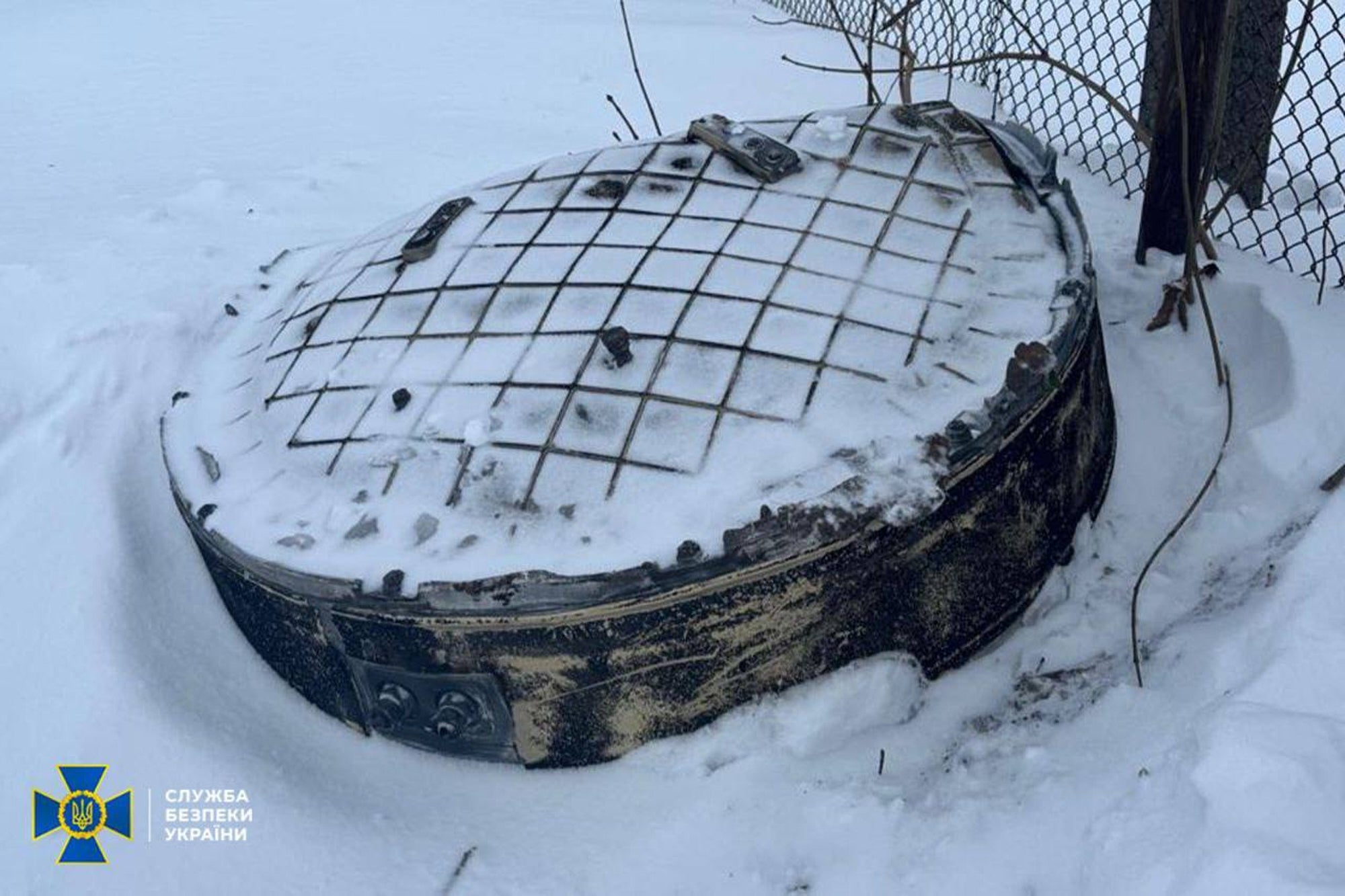 open image in galleryA fragment of the Russian Oreshnik intermediate-range hypersonic ballistic missile that hit the Lviv region (AP)
 open image in galleryDebris from the Oreshnik missile fired on Ukraine (Reuters)
The attack came days after European countries, including the UK and France, committed to putting boots on the ground in Ukraine to aid peacekeeping efforts in the event of a ceasefire, while Washington reaffirmed its pledge to provide security guarantees for Kyiv.
The EU’s foreign policy chief, Kaja Kallas, said the strike was “meant as a warning to Europe and to the US”.
“EU countries must dig deeper into their air defence stocks and deliver now,” she said. “We must also further raise the cost of this war for Moscow, including through tougher sanctions.”
German chancellor Friedrich Merz added: “Threatening gestures are intended to instil fear, but they will not work. We stand with Ukraine.”
 open image in galleryThe Oreshnik missile system during training in an undisclosed location in Belarus (Russian Defense Ministry Press Service)
A senior Ukrainian official said the missile had struck the workshop of a state enterprise near the Polish border.
Impact from several submunitions caused “minor penetrations of concrete structures” at the workshop and made craters in the forest area, they added.
Meanwhile, the SBU state security service said Russia sought to destroy civilian infrastructure in the surrounding region amid “rapidly deteriorating weather conditions”.
Temperatures in Ukraine are set to plummet well below zero, forecast to drop to -15C in the capital of Kyiv early on Saturday morning.
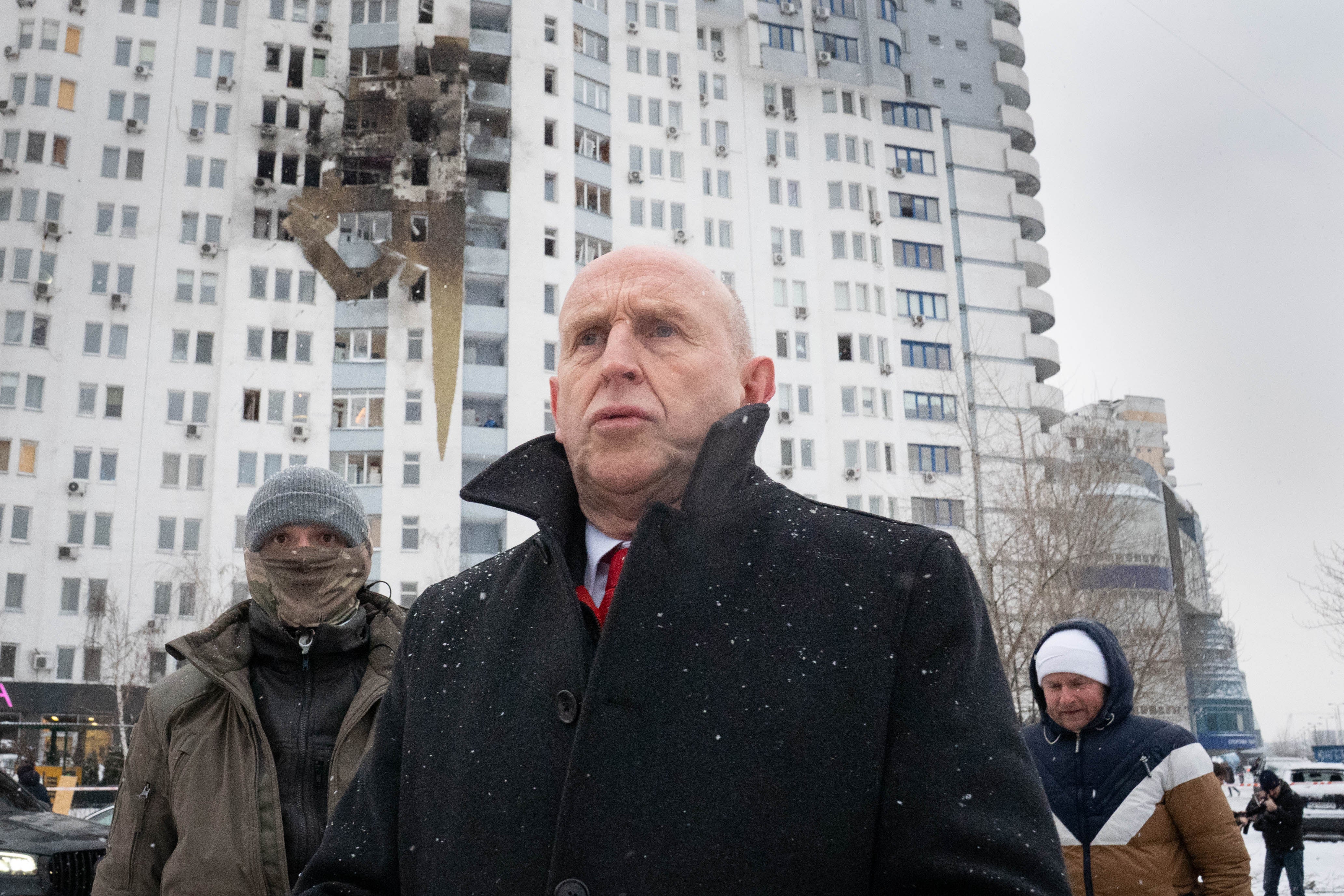 open image in galleryThe UK’s defence secretary John Healey meets emergency service workers in Kyiv on Friday (PA)
Russia has scaled up its attacks on energy infrastructure ahead of the cold snap. On Friday, an attack on Kyiv left 500,000 people without power, as mayor Vitali Klitschko called for residents to temporarily evacuate if possible.
At least four people were killed in Kyiv after Russia launched a major offensive across Ukraine with 278 missiles and drones, according to Ukrainian tallies. Kyiv said it downed 244 of them in flight.
UK defence minister John Healey visited the site on Friday of a strike on an apartment building after meeting with Volodymyr Zelensky.
It comes after a Russian air attack on Thursday left 1 million people without electricity and heating across large swathes of Ukraine’s central and southeastern Dnipropetrovsk and Zaporizhzhia regions.
More about
Vladimir PutinRussiaKyivUkraineMoscowUKJoin our commenting forum
Join thought-provoking conversations, follow other Independent readers and see their replies
Comments